1. Product Overview
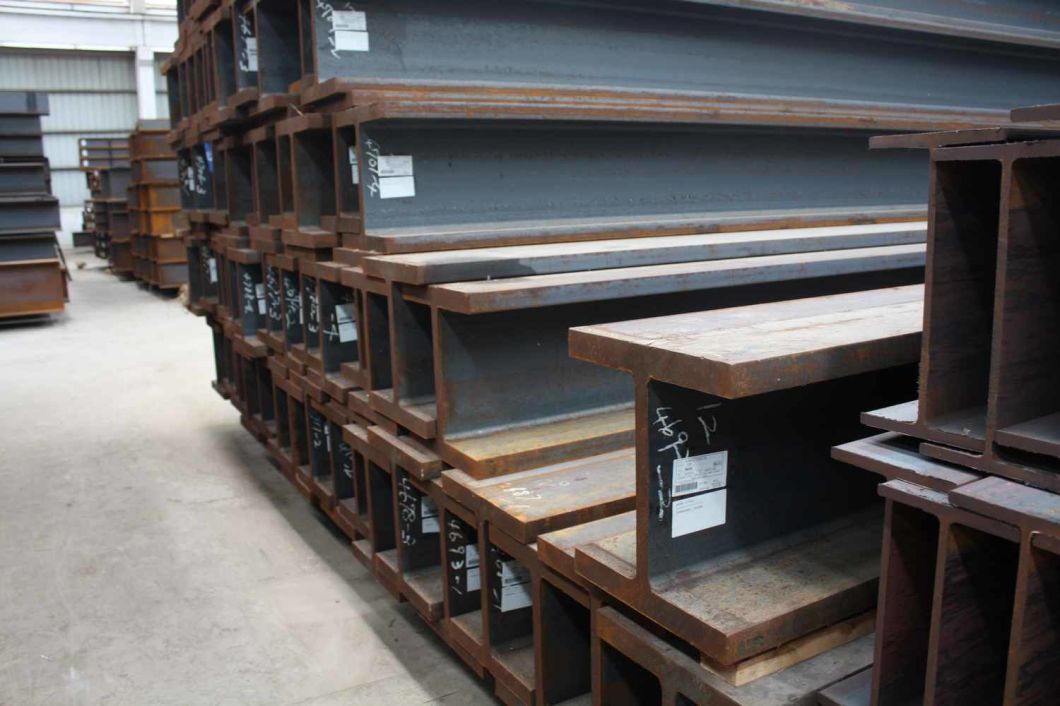
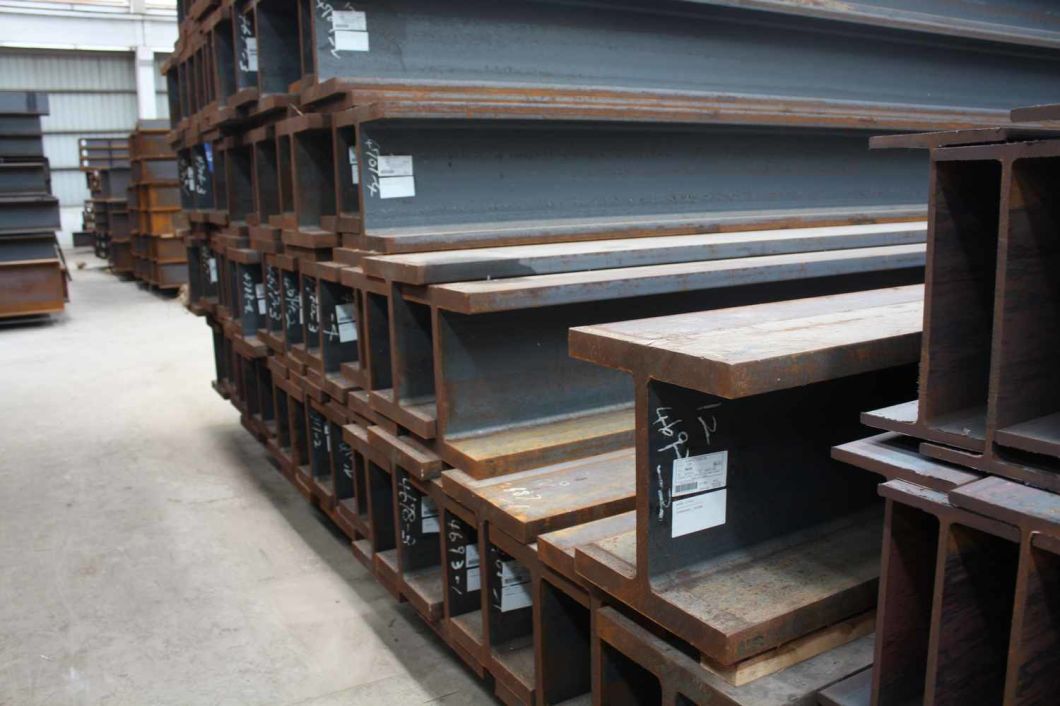
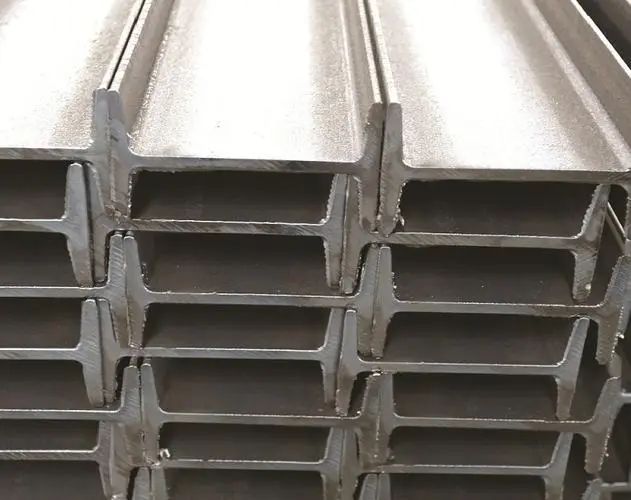
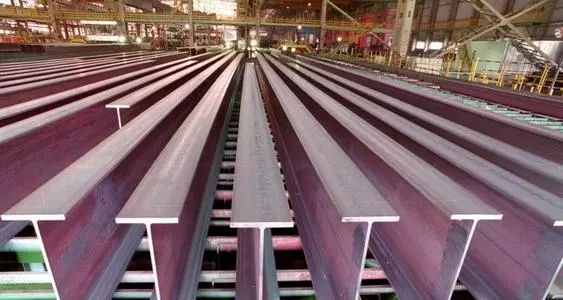
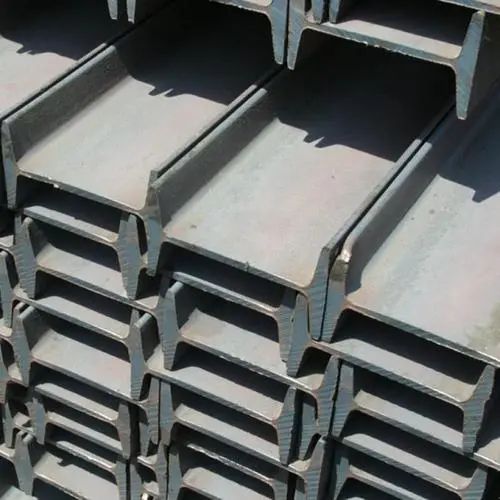
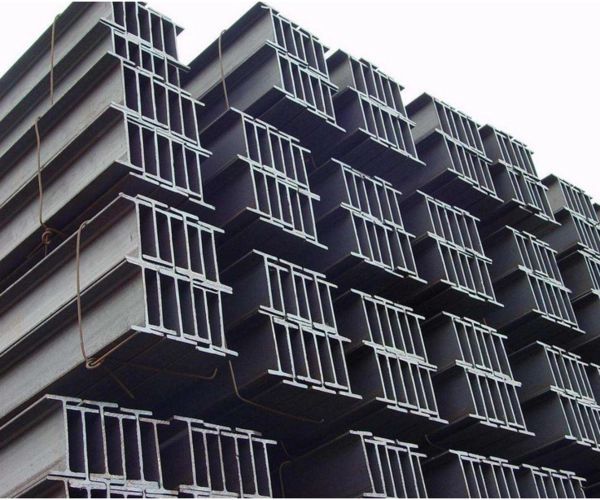
Hot Rolled H Beams (also referred to as Hot Rolled Steel H-Beams or H-Section Steel) are high-performance structural steel products with a distinctive H-shaped cross-section, consisting of two parallel horizontal flanges connected by a vertical web. Manufactured through a precision hot rolling process, they are renowned for their excellent load-bearing capacity, high strength-to-weight ratio, superior rigidity, and good weldability. As a core structural component, Hot Rolled H Beams are widely applied in large-scale construction, infrastructure projects, heavy machinery manufacturing, and industrial facilities, playing an irreplaceable role in supporting heavy loads and ensuring structural stability in large-span and high-rise structures.
2. Manufacturing Process
The production of Hot Rolled H Beams adheres to strict industrial standards and sophisticated process control to ensure consistent quality, dimensional accuracy, and excellent mechanical properties. The core process steps are detailed as follows:
1. Raw Material Preparation: High-quality steel billets (preferably shaped billets for H-beam production) are selected as the raw material, mainly including carbon steel, low-alloy high-strength steel, and other specified materials. All billets must comply with relevant international standards (e.g., ASTM, EN, GB) and undergo strict chemical composition and surface quality inspection to guarantee the final product’s mechanical properties and structural integrity.
2. Heating: The billets are heated to a high temperature (ranging from 1200℃ to 1250℃) in a reheating furnace, with a soaking time of 90min to 180min. This heating process fully softens the metal, ensures uniform temperature distribution, and preserves the internal structural stability of the billet, laying a solid foundation for the subsequent rolling process while avoiding material defects such as cracks.
3. Hot Rolling: The heated billets are first subjected to blooming rolling to preliminary shape the cross-section, then passed through a series of universal rolling mills and edging mills for precision rolling. The rolling process strictly controls the opening and finishing rolling temperatures (opening rolling temperature 930℃~970℃, finishing rolling temperature not lower than 880℃) and the cumulative flange reduction rate (not less than 80%), forming the standard H-shaped cross-section with precise flange width, web thickness, and overall dimension. The hot rolling process refines the metal’s grain structure, significantly improving the beam’s tensile strength, toughness, and impact resistance compared to welded H-beams.
4. Cooling: After the rolling process, the H beams are cooled through a controlled cooling method (cooling rate not less than 30℃/s) to a final cooling temperature below 600℃, then transferred to a cooling bed for air cooling. This step is critical to ensuring dimensional stability, preventing deformation, and maintaining the desired mechanical properties such as strength and toughness.
5. Cutting & Finishing: The cooled H beams are cut into standard lengths (6m, 12m, or custom lengths as required by the customer) using precision cutting equipment. They then undergo surface treatment (e.g., shot blasting, scale removal) to eliminate surface oxide scale and impurities, improving surface quality. No additional coating is applied unless specifically requested by the customer (e.g., hot-dip galvanizing for corrosion resistance in harsh environments).
6. Inspection & Packaging: Each batch of hot rolled H beams undergoes strict quality inspection, including dimensional measurement, mechanical property testing, ultrasonic non-destructive testing (NDT) for internal integrity, and surface defect inspection. Only qualified products are packaged in bundles with protective wrapping (e.g., waterproof paper, steel straps) and wooden supports to prevent bending, collision damage, rust, or contamination during transportation and storage.
3. Product Specifications
3.1 Dimensional Specifications
Standard dimensions are available for immediate delivery, and custom specifications can be tailored to customer requirements. The dimensions of Hot Rolled H Beams are defined by flange width (B), web height (H), web thickness (t1), flange thickness (t2), and length (L). Common standard specifications are as follows:
|
Web Height (H) |
Flange Width (B) |
Web Thickness (t1) |
Flange Thickness (t2) |
Standard Length (L) |
Tolerance |
|
100mm - 1000mm |
100mm - 600mm |
6mm - 30mm |
8mm - 40mm |
6m, 12m |
H/B: ±1.0mm; t1/t2: ±0.5mm; L: ±50mm |
Note: Custom dimensions (web height, flange width, thickness, and length) are available upon request, subject to minimum order quantity (MOQ) requirements. For special dimensional needs, please contact our sales team for detailed consultation. The flange thickness of our hot rolled H beams ranges from 4mm to 20mm to meet different load requirements.
3.2 Material Grades
Hot Rolled H Beams are available in various material grades to meet different application requirements, including general structural use, heavy-load-bearing, and harsh environment applications. Common grades include, but are not limited to:
• Carbon Steel: ASTM A36, SS400, Q235B, A283 Gr.C (suitable for general construction, light industrial frames, and low-load structural components, with balanced strength, weldability, and cost-effectiveness).
• Low-Alloy High-Strength Steel: ASTM A572 Grade 50, Q355B, EN 10025 S355JR (ideal for heavy-load, large-span structures, bridges, and offshore platforms, with higher tensile strength, better corrosion resistance, and impact resistance).
• High-Strength Alloy Steel: 45# (AISI 1045), 40Cr, Q460B (used for heavy machinery frames, high-rise building columns, and other high-demand components, with excellent mechanical properties and wear resistance). The chemical composition of high-strength grades typically includes C 0.08~0.10%, Si 0.25~0.35%, Mn 1.00~1.20%, Cr 1.00~1.30%, etc., to enhance performance.
Material composition and mechanical properties can be customized to meet specific project requirements, such as high-temperature resistance, corrosion resistance (weathering resistance), or enhanced抗震 (seismic) performance.
3.4 Commonly Used International H Beam Models
Hot Rolled H Beams have standardized models in international markets, which are classified according to mainstream regional standards (ASTM, EN, JIS). These models are widely recognized and applied in global construction, infrastructure, and machinery manufacturing projects, with clear dimensional and performance correspondences. The detailed models and explanations are as follows:
3.4.1 ASTM Standard (American Standard) H Beam Models
ASTM standard H Beams are mainly specified by ASTM A992 (the special standard for H-beams) and ASTM A36, widely used in North America and regions adopting American standards. The model is named by Nominal Depth × Flange Width × Web Thickness × Flange Thickness, with the unit in inches. Common models and specifications are as follows:
• W Series (Wide Flange H Beams): The most commonly used series in ASTM standards, characterized by wide flanges, high load-bearing capacity, and suitable for heavy-load structures such as high-rise buildings and bridges. Common models: W4×13, W6×12, W8×18, W10×22, W12×30, W14×34, W16×40, W18×50, W24×62, W30×90. For example, W14×34 means the nominal depth is 14 inches, the flange width is 6.73 inches, the web thickness is 0.38 inches, the flange thickness is 0.66 inches, and the unit weight is 34 lb/ft.
• M Series (Medium Flange H Beams): With flange width between W series and S series, suitable for medium-load structural components. Common models: M12×11, M14×13, M18×18.
• S Series (Shallow Flange H Beams): Shallow web depth and narrow flanges, suitable for light-load frames and auxiliary structures. Common models: S6×12.5, S8×18.4, S10×25.4.
3.4.2 EN Standard (European Standard) H Beam Models
EN standard H Beams comply with EN 10025 (Structural Steel) and EN 10163 (Hot-Rolled Steel Sections), widely used in the European Union and other regions. The model is named by HE + Series Code + Nominal Height, and the series is divided according to flange width and thickness. Common models and specifications are as follows:
• HEA Series (European Wide Flange H Beams, Type A): Symmetrical cross-section, uniform web and flange thickness, suitable for general structural use. Common models: HEA 100, HEA 120, HEA 140, HEA 160, HEA 180, HEA 200, HEA 220, HEA 240, HEA 300, HEA 400. For example, HEA 200 means the nominal web height is 200mm, the flange width is 200mm, the web thickness is 8mm, and the flange thickness is 12mm.
• HEB Series (European Wide Flange H Beams, Type B): Larger flange thickness and higher load-bearing capacity than HEA series, suitable for heavy-load and large-span structures. Common models: HEB 100, HEB 120, HEB 160, HEB 200, HEB 250, HEB 300, HEB 450.
• HEM Series (European Wide Flange H Beams, Type M): The thickest flange and web in the HE series, with the highest load-bearing capacity, suitable for super heavy-load components such as bridge piers and heavy machinery frames. Common models: HEM 120, HEM 160, HEM 200, HEM 300, HEM 500.
3.4.3 JIS Standard (Japanese Standard) H Beam Models
JIS standard H Beams comply with JIS G 3133, widely used in Japan and Southeast Asian regions. The model is named by H + Nominal Web Height × Flange Width, with the unit in millimeters. Common models and specifications are as follows:
• H Series (Standard H Beams): Divided into light-duty (HL), medium-duty (HM), and heavy-duty (HH) according to load-bearing capacity. Common models: H 100×100, H 125×125, H 150×150, H 175×175, H 200×200, H 250×250, H 300×300, H 400×400. For example, H 200×200 means the nominal web height is 200mm, the flange width is 200mm, and the specific thickness is divided into different grades (e.g., H 200×200×8×12).
• HN Series (Narrow Flange H Beams): Flange width is smaller than the nominal web height, suitable for beam components in light and medium-load structures. Common models: HN 150×75, HN 200×100, HN 250×125, HN 300×150.
• HW Series (Wide Flange H Beams): Flange width is equal to or larger than the nominal web height, suitable for column components in heavy-load structures. Common models: HW 200×200, HW 250×250, HW 300×300, HW 400×400.
Note: The above models are the most commonly used international specifications. The specific dimensions, mechanical properties, and unit weights of each model can be provided according to customer requirements. For non-standard models or special application scenarios, we can provide customized production services based on the corresponding international standards.
3.3 Mechanical Properties
The mechanical properties of Hot Rolled H Beams vary by material grade, ensuring compatibility with different load-bearing and application scenarios. The following table outlines the typical mechanical properties for common grades:
|
Material Grade |
Tensile Strength (MPa) |
Yield Strength (MPa) |
Elongation (%) |
Impact Toughness (J) |
|
ASTM A36 |
400 - 550 |
≥250 |
≥20 |
≥27 (20℃) |
|
SS400 |
400 - 510 |
≥245 |
≥21 |
≥34 (20℃) |
|
EN 10025 S235JR |
360 - 510 |
≥235 |
≥25 |
≥35 (20℃) |
|
ASTM A572 Grade 50 |
450 - 650 |
≥345 |
≥18 |
≥41 (20℃) |
4. Applications
Due to their excellent load-bearing capacity, high rigidity, cost-effectiveness, and ease of fabrication, Hot Rolled H Beams are widely used in various industrial sectors, especially in large-scale structural projects. Typical applications include, but are not limited to:
• Building Construction: Main beams, secondary beams, and columns in high-rise buildings, commercial complexes, industrial workshops, and residential communities; roof trusses, crane beams in factories; and concrete structure reinforcement (e.g., foundation piles, shear walls).
• Infrastructure Projects: Main beams, crossbeams, and piers in bridges (especially steel bridges); supporting structures for highways, railways, and urban rail transit; and reinforcement of dams, ports, and offshore platforms.
• Heavy Machinery & Industrial Facilities: Frames, bases, and supporting structures for heavy machinery (e.g., cranes, excavators); brackets and platforms for industrial equipment; conveyor trestles, large storage tank supports, and mining roadway supports.
• Special Projects: Temporary support structures for construction sites (e.g., formwork supports); structural components for shipbuilding, aerospace facilities, and energy infrastructure (e.g., solar power plants, wind power bases); and H-beam piles for foundation engineering.
• Other Sectors: Agricultural machinery frames, large-scale exhibition halls, and stadiums, where large-span and heavy-load-bearing requirements are needed.
5. Quality Control & Standards
All Hot Rolled H Beams are produced in strict compliance with international standards to ensure product quality, safety, and compatibility with global projects. Our quality control system covers the entire production process, from raw material inspection to final product delivery. Relevant standards include:
• ASTM (American Society for Testing and Materials): ASTM A36, ASTM A572, ASTM A992 (special standard for H-beams)
• EN (European Norms): EN 10025 (Structural Steel), EN 10163 (Hot-Rolled Steel Sections)
• GB (Chinese Standards): GB/T 11263 (Hot-Rolled H-Beam and I-Beam), GB/T 3077 (Alloy Structural Steel)
Each batch of products is accompanied by a quality inspection report (QIR) and ultrasonic non-destructive testing (NDT) report, certifying compliance with the specified standards, mechanical properties, and internal integrity.
6. Storage & Handling Guidelines
• Store Hot Rolled H Beams in a dry, well-ventilated, and flat area to avoid moisture, rust, and deformation. If stored outdoors, use waterproof and moisture-proof covers, and elevate the beams off the ground (using wooden supports) to prevent contact with water and soil.
• Use professional lifting equipment (e.g., cranes with lifting slings) during loading and unloading. Avoid direct lifting by the flange edges to prevent bending, scratching, or damaging the surface and cross-section.
• Stack the beams neatly and securely, with wooden pads between layers to distribute pressure evenly. Do not stack them too high to prevent collapse and deformation. For long-term storage, apply protective coating to enhance corrosion resistance.
• Avoid contact with corrosive substances (e.g., acids, alkalis, saltwater) to maintain surface quality and extend service life. Clean the surface regularly if stored in a humid or corrosive environment.
7. Ordering Information
When placing an order, please specify the following information to ensure accurate product delivery and meet your project requirements:
• Material grade (e.g., ASTM A36, ASTM A572 Grade 50, S355JR)
• Dimensional specifications (web height × flange width × web thickness × flange thickness × length)
• Quantity (weight or number of pieces)
• Surface finish requirements (if any, e.g., hot-dip galvanizing, shot blasting)
• Delivery time and destination (port or warehouse address)
• Special requirements (e.g., custom mechanical properties, packaging, additional quality inspection items such as NDT)
For more information, technical consultation, or to request a quote, please contact our sales team. We are committed to providing high-quality Hot Rolled H Beams and professional one-stop services to meet your diverse project needs.